



Shopify for coffee roasters and tea shops
For roasters, tea merchants and specialty shops selling beans, ground coffee and loose-leaf tea, where flavour profile, grind and repeat purchases matter more than campaigns.
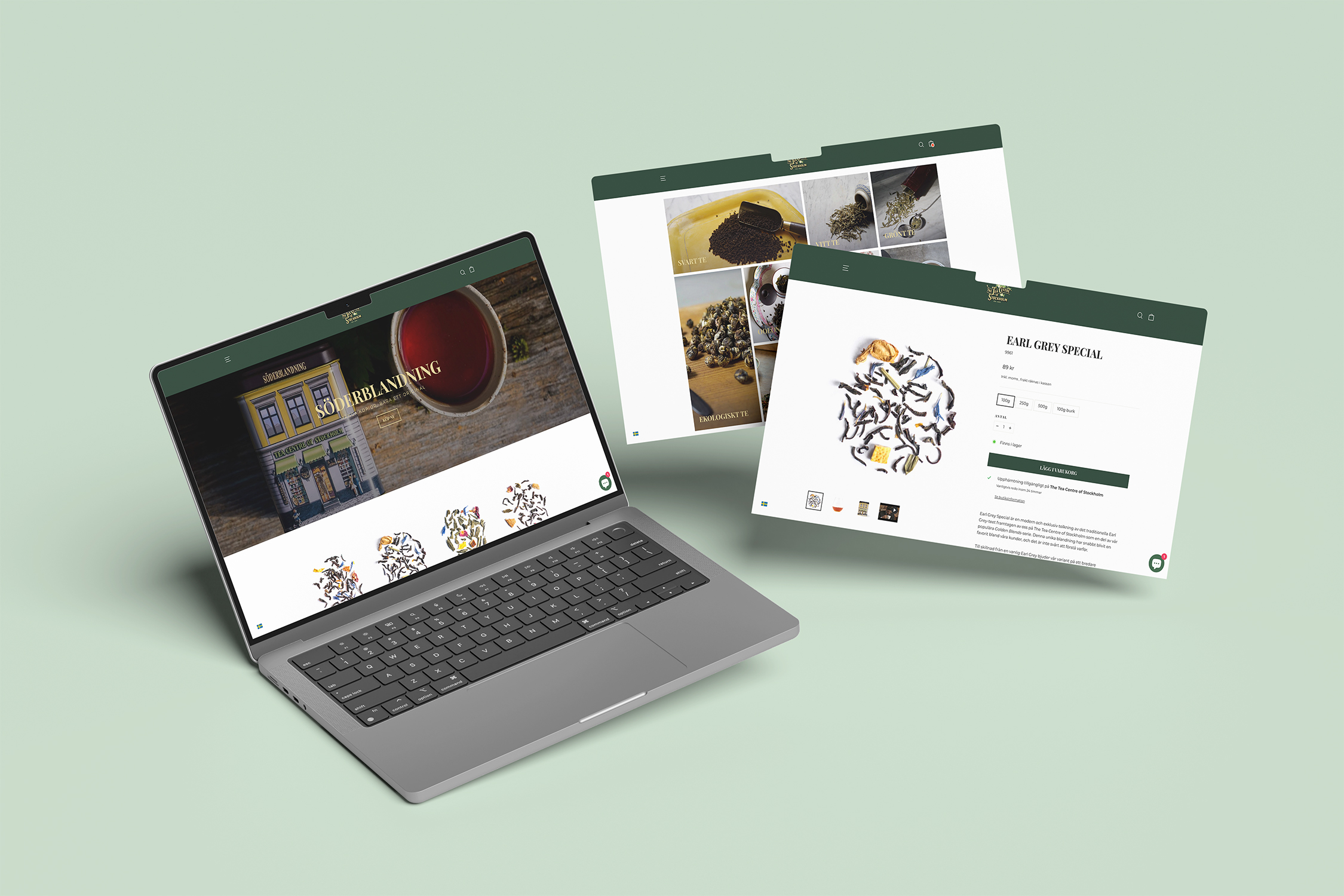
You cannot show taste in a photo
Coffee and tea are bought on description. The customer cannot smell or taste through the screen, so the product page has to do the work: origin, farm or region, variety, roast level or type of tea, tasting notes, acidity and body, brewing method. This is where a coffee roaster or tea shop differs from other food. Two bags of the same weight and almost the same price can be completely different products, and the customer needs help understanding why.
There are many variants, but they follow a logic. Coffee is sold as whole beans or ground for filter, French press, moka pot or espresso, in several pack sizes. Tea is sold loose by the gram or in tins, sometimes with flavourings that may contain allergens. The roast date is a selling point for roasters and needs to be visible. Repeat purchases are the great strength of the industry: someone who has found their coffee wants it again in three weeks, and a subscription is often the best business you can build. On top of that come offices and cafés wanting coffee in bulk packs on invoice, and December, when gift boxes and tea advent calendars become a season of their own with their own stock needs.
What is usually included
- Flavour profiles and filters
- Subscriptions
- Grind as a variant
- Offices and B2B
- Klaviyo flows
- Gift boxes
What we build for coffee and tea
Coffee and tea sell on description and repeat purchases. The list below is what we usually build for roasters and tea merchants.
- Flavour profile as a scale for acidity, body and roast level
- Subscriptions where the customer swaps beans, skips or pauses
- Grind options per brewing method
- Office coffee with fixed prices and invoicing
- Gift boxes and advent calendars for Christmas
Systems and apps that are often connected
We choose a proven app when it is enough and build a custom integration when it is not.
-
Subscription app
The customer chooses the interval, swaps beans or grind and skips a delivery themselves
-
Klaviyo
Welcome series, a reminder about the last bag and tips on the next coffee
-
Shopify B2B or a B2B app
Fixed prices, bulk packs and invoicing for offices and cafés
-
Fortnox (Swedish accounting software)
Orders and invoices from both the online store and office agreements
-
Shipping rules with dimensions
Letterbox-friendly packaging becomes cheaper to send than regular parcels
What is easy to miss
-
Flavour as free text
The flavour description is written as running text, so you cannot filter for all fruity coffees or everything decaffeinated.
-
A locked subscription
An app where the customer cannot switch coffee means that anyone who wants to try something new cancels.
-
Grind in the order note
When the grind is entered as a note, it gets missed at packing.
-
Grams without context
Loose-leaf tea in grams says little about how many cups it makes.
How we rebuilt The Tea Centre
The Tea Centre has a large and nuanced tea range. We refreshed the theme and worked on product information, flavour profiles and clearer product pages, so that the flavour, type and character of each tea are easier to understand. We use the same model for coffee: flavour profile, origin and brewing recommendation as metaobjects, grind as a clear variant and roast date from inventory. Everything is built as theme sections, so you can change the content yourselves.
What we did for The Tea Centre
For The Tea Centre the product pages were built around the questions the customer actually has before buying, not just price and image. The result is product pages and a structure that make it easier to understand the flavour, type and character of each tea.

Questions from roasters and tea merchants
Which subscription app should we choose?
It depends on how freely the customer should be able to make changes. Shopify's own subscription app is enough for simple setups with a fixed product and interval. If you want customers to switch coffee every month, get a surprise bean or combine a subscription with one-off purchases, you often need a more advanced app. We go through the setup first and then choose the app.
Can the roast date be shown automatically?
Yes, if the roast date is stored somewhere we can read it, for example in inventory, in a field per batch or in your roasting schedule. The simplest option is often to show the next roast day and promise delivery after it, which also says something about how fresh the coffee is.
How do we present flavour in a way that helps the customer?
We build the flavour profile as structured data: scales for acidity, sweetness and body, tasting notes and recommended brewing method. It can be shown graphically on the product page and used as a filter. The Tea Centre is an example where flavour, type and character were given a clearer place on every product page.
We also sell coffee to offices. How is that handled?
Offices can get their own account with fixed prices, bulk packs and recurring orders on invoice. We build it with Shopify's B2B or a B2B app, depending on your plan. If you also offer machines or servicing, these can be set up as separate products that only business customers see.
Does the right of withdrawal apply to coffee and tea?
Generally yes, since the goods keep for a long time. Sealed packaging that the customer has opened may be an exception for hygiene reasons, but that has to be assessed product by product. Write the terms clearly and preferably have a lawyer read them, and we will build them into the store.
Related industries
Building for this industry?
Answer a few questions and see a preliminary price right away. We call you and finalise it together with you.
Rather talk directly? hej@wubs.se · 076-191 68 42