


Shopify for children’s clothing
For stores selling baby clothes, snowsuits and children’s clothing sized by height, where children outgrow garments quickly and a lot is bought as a gift by someone other than the parent.
The child grows, the customer comes back
Children’s clothes are sold in sizes based on the child’s height in centimetres, often in double sizes such as 50/56 and 62/68, and sometimes by age. Parents know roughly how tall their child is and want to be able to buy a size up for next season. Grandparents buying a gift rarely know, and need help choosing by age. Children outgrow clothes within months, which makes repeat purchases natural: the same family comes back season after season with a child who has grown taller.
Materials and safety carry a lot of weight. Parents ask for organic cotton, soft seams, press studs that hold, and no cords or small parts that could be a risk for the youngest. There are rules for things like drawstrings in children’s clothing, and sellers need to keep track of what applies to their products. Outerwear such as snowsuits and rain gear has its own season, with waterproof ratings and warmth ratings that customers compare.
What is usually included
- Size scale and age filter
- Klaviyo
- Gift guide
- Bundles and sibling purchases
- Circular flow
What we build for children’s clothing
Children’s clothing needs sizing logic that works for both the parent and the gift buyer, and flows that follow the child as they grow.
- Sizes in centimetres with an age filter
- Reminder about the next size
- Gift guide by age
- Waterproof and warmth ratings for outerwear
- Consignment and resale of second hand
- Bundle price for sibling purchases
Systems and apps that are often connected
We choose a proven app when it is enough and build a custom integration when it is not.
-
Klaviyo
A reminder when the child is likely to need the next size, and seasonal emails before autumn and spring
-
Judge.me or Okendo
Reviews about how the size fitted, valuable when the parent buys a size up
-
Gift cards and gift wrapping
For grandparents buying for someone else’s child
-
Consignment and resale
Custom logic for second-hand garments the children have outgrown
What is easy to miss
-
Sizes stated several ways
Sometimes centimetres, sometimes age, and the filter becomes useless
-
No help for the gift buyer
Someone who does not know the child’s height chooses wrong
-
Snowsuits without data
Warmth and waterproof ratings are missing, and the customer goes to a store that shows them
-
No reminder
The customer who bought last autumn hears nothing when the next size is needed
-
Safety in a PDF
Information about drawstrings and small parts sits where nobody opens it
Size by height, filter by age
We put sizes on one shared scale in centimetres and link each size to an age range, so the customer can filter by both height and age. Size advice per model, for example that a snowsuit runs large to fit clothes underneath, sits in metafields close to the size selector. Materials and labels stated by the manufacturer, waterproof rating and warmth rating become their own specification. Buying for siblings and families is made easier with bundles and the same garment in several sizes. For GlamupKids we built the logic that lets consigned children’s clothes be resold and linked to the right person.
How it works at GlamupKids
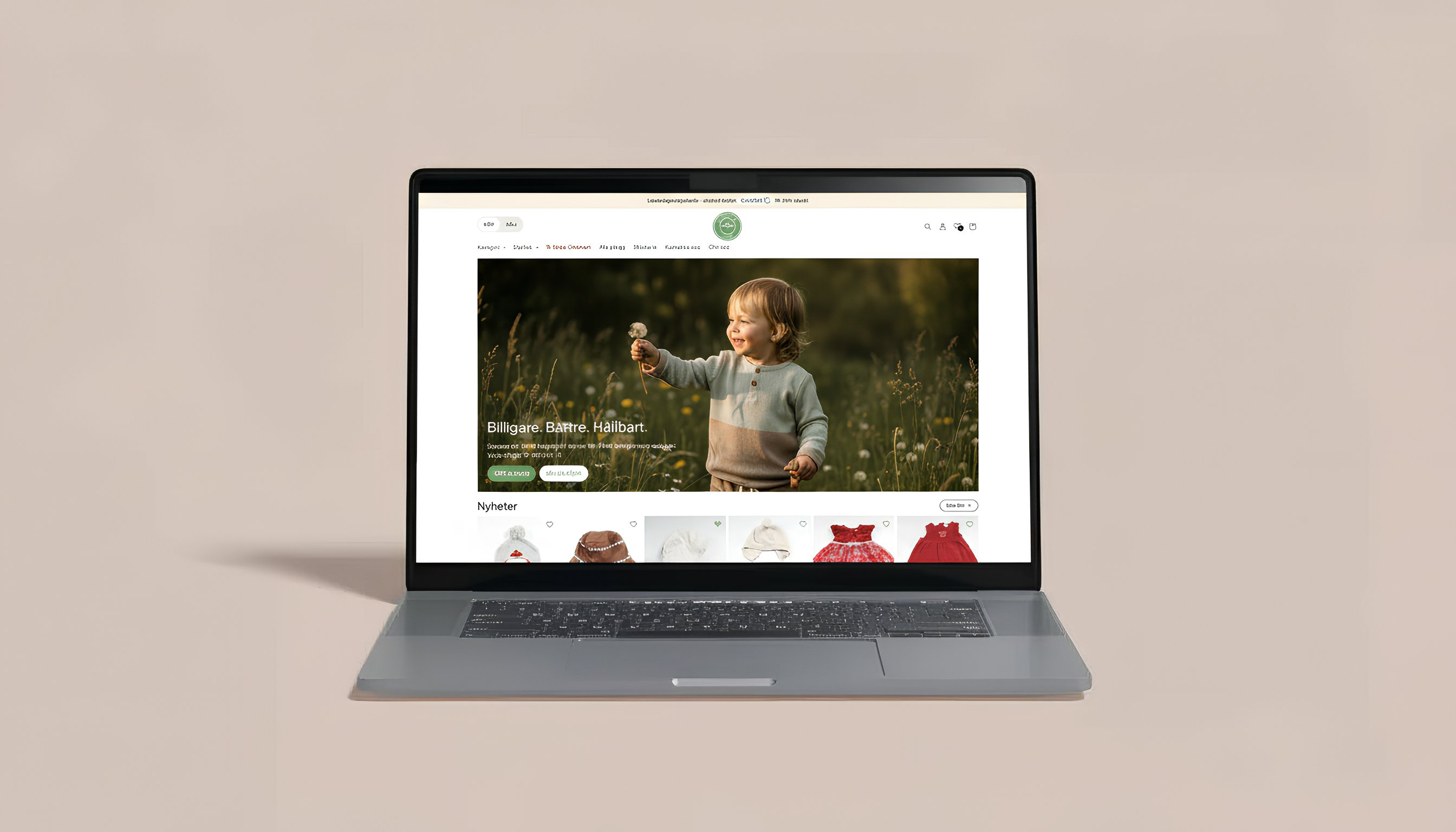
For GlamupKids, which sells circular children’s fashion, we built system logic for consignment, listing, sales and attribution, so that consigned children’s clothes can be resold and linked to the right person. Glam Up Kids on working with us: ”Communication has been warm, clear and easy throughout the whole process.” (translated from Swedish)

Questions from children’s clothing stores
Can the customer filter by age instead of size?
Yes. We link each size in centimetres to an approximate age range, so the customer can choose, for example, one to two years. It mainly helps people buying a gift who do not know the child’s height.
How do we remind customers about the next size?
With Klaviyo, an email can go out some time after the purchase, with garments in the next size. The timing can be adjusted to the size, since small children grow faster. It only requires the size to exist as data on the order, which it does if the variants are set up correctly.
Can we sell second-hand children’s clothes in the same store?
Yes. Second hand requires unique products with a stock of one, condition and often consignment from other families. We have built it for GlamupKids, where consigned garments are resold and the sale is linked to the right person.
Which rules apply to cords and small parts?
There are requirements for drawstrings and small parts in children’s clothing, especially for the youngest. We cannot give legal advice, but we can make sure the safety information is visible on the product. Check the requirements with the Swedish Consumer Agency (Konsumentverket) or your supplier.
Can we sell the same garment in several sizes for siblings?
Yes. The customer can add several sizes of the same garment to the cart directly from the product page, and we can offer a bundle price for sibling purchases. Stock is deducted per size as usual.
Related industries
Building for this industry?
Answer a few questions and see a preliminary price right away. We call you and finalise it together with you.
Rather talk directly? hej@wubs.se · 076-191 68 42